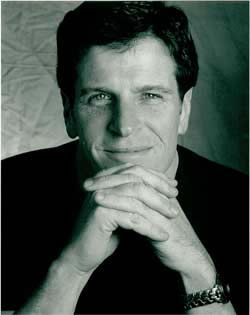
If you are in North America, it is Damian Erskine's birthday today, so tweet, email, fb wall, or just call him up and say Happy B-day. I think he turns 14 today. Or 43. It's hard to tell.
Christian McBride is going to release an album of just duets in November, "Conversations With Christian" will be released on Mack Avenue Records. "Conversations..." is a CD of 13 duets with some of Christian's closest friends and collaborators - Sting, Angelique Kidjo, Chick Corea, George Duke, Dee Dee Bridgewater, Eddie Palmieri, Roy Hargrove, Regina Carter, Russell Malone, Gina Gershon, Ron Blake, the late Dr. Billy Taylor, and the late Hank Jones. If you like singing and bass, but hate all the other instruments clogging things up, you will probably like this record. Christian is a double-threat electric/upright player, so I am sure he will sneak in a little electric bass playing somewhere on the record.
Here are couple of interviews with two of the A-team for bass, Bob Cranshaw ( Sonny Rollins) and Ron Carter (Miles Davis and 10000 others). Both are from a radio show out of Arizona I think. Bob talks about the business of recording and how it was just that sometimes. Cranshaw is one of the only guys to play electric in a somewhat straight ahead jazz setting with Sonny Rollins so check him out if you can. And Ron Carter, what can you say? He gets called "the most recorded bassist in history" a lot, and I am sure not going to argue with that.
Time for another episode of one of the most popular features here on Basso Ridiculoso.
This episode brings us a Seattle local hero jazz pianist, Randy Halberstat.
Randy is a professor at Cornish College of the Arts, where he originally was asked by Gary Peacock to fill in for a few classes that Peacock was teaching at the time. That is a pretty heavy endorsement right there. Now, Randy is a full professor and teaches piano and improvisation at Cornish.
Randy has also written a great book called "Metaphors For The Musician" which is one of the most interesting and helpful music books in my Basso Bass Book collection. And I own a LOT of books about music, it is seriously up into the hundreds of books at this point and Randy's book it one of the best. His book is not a book about scales, but it will change how you play them. It is not a book about learning tunes, but it will show you how to learn any tune you want deeper and faster than ever before. It is not a "you can play this scale over this chord" kind of book (although, there is some of that in there) but instead it takes you from scales to music in very interesting and engaging ways. Big Basso stamp of approval on this one.
Lest you think Randy is just some ivory tower academic, let me dissuade you of that incorrect idea. He also is a recording artist on Origin Records and has cut sides (as the cats say) on his own and as a side man for people like Mimi Fox and Greta Matassa. Some of his tunes are also in the Sher Real Books.
So Randy has seen probably his share of young students with chops through his teaching and has also got to play with legends like Gary Peacock, so it should be very interesting to get his take on what makes a "good" bass player.
Here is what Randy said (emphasis mine) :
For me, this question immediately splits into two questions:
"What do I want from a bass player?" and
"What do I want from any musician?"
Just to be ornery, let me go to the second question first. I need my musicians to have their ears wide open. They need to be in such control of their own musical "tasks" that they can listen to the others in the band with as much avid interest as an audience member. If they're too focused on taking care of their own business, they won't be able to contribute to a unified band sound, which is really more important. If a musician has his ears open and really hears everything that's going on around him, I know I can relax and just play. At that point, I don't care what he plays in response to what I play: he can imitate me, complement me, or contrast with what I'm doing. I know it'll be an honest and well-informed decision, and that's all I want.
I want my musicians to have distinct personalities. If one musician plays "behind the beat" and the next plays "on top of the beat," that's OK: I just need to know where they're coming from. I can enjoy playing with almost all types of musicians, but it's difficult to make something happen with a musician who's doing what he thinks he should, as opposed to what he wants to.
Of course, I want my musicians to be well-versed, both in terms of repertoire and vocabulary. Really, I just want to sense that they love and respect this music as much as I do. If they do, the repertoire and vocabulary will be there.
Hmm, frankly, that doesn't leave a lot for my answer to question #2.
I guess I would say that I want a bass player who enjoys both the "traditional" role of the bass as well as the opportunity to make a more personal statement. If a bassist is never willing to lay down a walk or a two-beat feel, and/or if he spends all of his time in the upper register of the instrument, it leaves me wondering why he didn't just become a guitarist. Again, it has to do with the overall band sound. Doesn't he realize what an opportunity he's missing to knit the band sound into a coherent whole? Why try to simulate what the drums and piano are already doing? This is a touchy area. I really don't want to make a bass player my "beast of burden," just laying down the groove all night so I can display all my cool reharmonizations and rhythmic displacements without fear of getting lost. I don't want to tell a bass player what or how to play: I want him to feel free to play what he hears. But if what he hears just doesn't contribute to the overall sound I'm going for, I'll just look around for someone else. And that doesn't mean that he's wrong. Being able to enjoy another musician's music and being able to play with that musician are not the same. Vive la difference!
I have Ben's record with "Dragzilla" on it..I forget the name of it, but it is a great record. Check out the interview and some of his other tunes on this NPR interview.
Electric/Upright jazz/funk/pop/classical bassist Christian McBride wrote a post about all the musical things he did during the year 2010.
Um, wow.
It is pretty mind boggling how many different musical projects he was involved in during a single year, everything from playing with Sting to Sonny Rollins and from gigging in places from Detroit to Singapore.
He also touches on some of the personal things that went on his life, both good and not so good.
If you are in NYC, he is going to be at the Apple Store talking about historic jazz recordings as well. I would love to hear his list of desert island disks. I know he would have at least one Jaco record in there somewhere!
Check out his book report on how he spent his 2010.
First of all, the answer to what people want in their bass player is not "a nice rack" (either kind) or "fresh bullet holes". We are talking musically here, people, not anatomically. So enough with the jokes. Thats my department.
In Episode 2, we get the lowdown on bass players from saxophonist Bob Reynolds, fresh off touring with John Mayer. (Yea, that John Mayer) and doing some gigs in NYC with someone all us bass players should know, Janek Gwizdala.
Bob not only plays sax in Mayer's band, he also was part of the house band for the Bonnie Hunt talk show, is a Rico Reed endorsee, and has several of his own projects that play his award winning compositions. His 2006 album "Can't Wait For Perfect" was voted Best Debut in the Village Voice's jazz poll and he has won 4 ASCAP Young Jazz Composer awards. He does all kinds of side work/featured soloist stuff across all genres - Nellie McKay, Guy Sebastian, Jonah Smith Brian Blade, and Tom Harrell - as just a small sample of the range of situations he plays in. You can also hear him on Janek's latest album. He even has his own set of samples of well, himself, so you can have Bob at home if you use Reason or other electronic music tools. And then, in the massive amount of free time he has left over, he runs one of the best video lesson sites going on the net, not just for sax players but for anyone that wants to get their improv on from anywhere on earth with an internet connection. So he is a busy guy.
As you can imagine, a soloist like Bob gets to play with a lot of different people and in a lot of different styles of music, from jazz, to pop, to rock, to stuff that is impossible to put a label on like his electronica project. I can only imagine how many different bass players he has played with over the years...100? 500, 1000? A metric arse-load, for sure. I do know he has played with a very broad selection of bass players that are known experts in a lot of genres - Janek Gwizdala, Sean Hurley, Pino Palladino, Richard Bona - some seriously heavy cats I believe they are referred to. And so obviously when traveling in those musical circles, he is going to meet a lot of people that play at a very high level. My point is that I am willing to bet Bob's thoughts about "good bass playing" are shared by many others involved in music at the same level. So this is very likely what a lot of players, and especially soloists and singers think are the qualities that a bass player they want to play with should have.
Here is a gig Bob did with Mayer at a small, intimate, little out-of-the-way venue called THE HOLLYWOOD BOWL, you know for just for a couple of folks....
And when I say "a couple" I mean 20. THOUSAND.
And here is Bob grooving with a looper at the infamous 55 Bar in NYC.
And getting a solo on "Austin City Limits":
Whatever your thoughts are about Mayer (he tends to be polarizing and says some, uh, interesting things) that is a seriously sick band. Forget about it. Those guys can play. Get out of here.
And whatever you think about the music business, playing in a group at that level, the stadium show/national TV level, means you have your act together. There is no "hey man, I am just not feeling it tonight", or "Oh yea, I didn't get around to learning that tune, sorry, I was in the zone playing Call of Duty last night man!" allowed. You are on or gone.
So Bob has real experience at the very top of the music pyramid, on both the creative side with playing and composing and on the business of performing side. He is not talking to you as a guy imagining what you MIGHT need to be able to do in order to play on a TV show and do stadium shows for an entire tour. He does it.
If one were to have any aspirations to pursue music full-time as a bass playing human being, it would behoove one to read Bob's thoughts and really embrace them, because it is not very often you get the direct line to hear an honest and unfiltered opinion from someone who travels in the kind of musical circles Bob does. It is also a testament to Bob's character that he donated his time to answer this question (while he was traveling no less!!) when some random shmoe with a free blog who he doesn't even know emails him and asks for a freebie. That's class, right there.
So... what does Bob think a "good" bass player is?
I will let him tell you electronically below, I emphasized a few places that I thought were particularly interesting.
Print this one out and put it somewhere you can read it. Often. It's specific, its detailed and it is very honest.
Mr. Reynolds, your thoughts?
Q: What do I look for in a bass player?
A: A warm tone, solid time, a great hook-up with the drummer, and, if they are
to be a soloist, a sense of form and "the big picture" when soloing.
Truthfully, however, my impression of any bass player (or any rhythm section player) will be a direct result of how I feel about myself when playing with them. I will reflect on my level of comfort and quality of my performance to judge whether I choose to play with that person again.
We are all selfish. We all want to sound good. A great bass player makes it
easy to sound my best.
What do I mean by level of comfort? Was the bassist prepared? Did he know the music cold or was I constantly anxious he would forget to skip the 2nd ending on the repeat? Was his time solid? Was his sound good or was it bugging me all night? What do I mean by quality of my performance? Was the bassist over-playing during my solos, causing me to fight for my own space, or was he supportive? Did his playing/sound inspire fresh ideas on my part or was I playing on autopilot because I was mentally battling for ground?
With my students I stress the 5 T's. I believe if you focus on these 5
elements the rest largely takes care of itself:
Tone - it's the first thing a listener hears
Time - it determines a listener's comfort level
Technique - not how fast or how many notes but quality of execution
Triads - the bread and butter of harmony
Tunes - play songs, not licks (*same for solos: should be mini songs)
TONE If I am turned off by your tone you've lost me for good. This goes for instrumentalists and vocalists. If your tone is not inviting I hope you have something amazing up your sleeve to keep me listening. (And it better not be slapping!) Your tone should be like a warm blanket that I want to be wrapped up in.
TIME Are you rushing? (I hope not) Is your pocket solid? If you've got great time and a solid hook-up with the drummer then everything should just "pop" and it will feel comfortable to play over. If you're confident I'll be comfortable.
TECHNIQUE Don't misinterpret this. It's not about quantity of notes it's about quality of note choice and note placement. I measure technique as the quality of execution, the distance between notes, and the placement of phrases. This is not what you do but how well you do what you do.
TRIADS As my good friend Sean Hurley (bassist with John Mayer and in-demand studio player) likes to say, "I play the roots". After that, triads should come before substitutions and hot-licks. You'd be surprised how amazing it can sound when the bass player just plays roots, long round notes, and holds it down.
TUNES Know lots of them and know them really well. If you are in a situation where you don't know one, know it next time and I don't mean having a fake-book app.
*As an extension, I think "tunes" applies to soloing. Your solos should be mini-songs rather than pyrotechnic adventures. Did I mention the no-slapping policy? ;)
Certainly there are different styles of bass players and what might be appropriate in one setting may be undesirable in another. Are you playing a 5-string and trying out your Jaco licks on a straight-up pop gig? Chances are you won't be on that gig very long.
Take Janek Gwizdala and Sean Hurley, two electric bassists with styles different as night and day, for instance. They both are incredible at what they do and I therefore love playing with both of them. I know the music will have a different slant depending on which guy is holding it down. I don't expect one to sound like the other.
Listen to the harmonic palette Janek creates behind my solo on "What She Didn't Say" from my Live in New York album. It's incredibly creative and inspiring for me as a soloist.
Conversely, listen to Sean hold it down on this solo I take with David Ryan Harris's band. As I get busier, he gets simpler, he's not competing with me or matching me note for note. He's locking it in with JJ (the drummer), leaving me an incredible launch pad to solo from.
And speaking of holding it down: both Janek and Sean are great unofficial M.D.'s (musical directors). I can always trust they will guide the rest of the rhythm section behind me and offer great arrangement suggestions in rehearsals.
For acoustic players, I like someone who has what I once heard referred to as "hump". It's a bounce, or a lilt to your playing that makes the music dance. I like the Ray Brown, Christian McBride, Reuben Rogers style. A guy like Reuben is a vibe-generator: he emits good vibes both personally and musically and makes everyone feel and sound better.
Reuben, he once told a friend of mine, who wanted advice on how to land more gigs, that his secret is "Not that I'm the greatest bass player out there, but I know how to make other people sound good." Take note.
I think what you'll find about most A-list bass players is that they make the bands/projects they're a part of sound great. We all should strive for this quality no matter what instrument we play.
One last thing (and perhaps the most important): be a good person. All the outstanding playing abilities in the world are worthless if I'm uncomfortable when you're in the room.
Oh yea.
Thats some very salient and honest advice right there. Like I said, print this one out, and the next time you wonder what other people in the band are thinking about your playing while they solo - read this.
And, I have to say, if you are a doubler and play another instrument like any kind of sax or even keyboards, you should take advantage of the times we live in by signing up for some improv lessons on Bob's site. Because even though Bob does play a saxophone, the stuff on his site is about music, no matter what instrument you play. Even if you are a bassist that just wants to get a non-bass players perspective on playing and learn some things that sax players have been using for decades, sign up. We have some unique opportunities living when we do, as far as communication and exchange of information goes, and so being able to get access to people actually out there doing it in a one-on-one situation is pretty incredible.
When I started this blog I realized it needed to offer something more than just articles about bass players. EVERYONE does that at every bass site on the web.
Instead, what might be more interesting is if I asked musicians who were not even bass players what it is they expected and wanted from the bass players in their band. These are the people that bass players are going to work for anyway.
Because face it, even in the world of solo bassists and mega-chops players, 99% of gigs that bass players get are supportive and, especially in a pop/rock situation, it is questionable you are even going to get a solo. And that other 1% of bass gigs where you do, and are actually bass showcase gigs...are gigs that are started by bass players, so the bass chair is kinda covered.
In general, all this new focus on bass centric resources seems to be causing an echo-chamber feedback loop and a chops arms race resulting in a deadly plague sweeping electric bass players - Shreditis. This is a fatal disease which kills your gig and gets you fired from your band. More and more it is striking down healthy bass players in their prime, rendering them practicing in their rooms all alone completely band-less.
Now this is the bass playing world post-Jaco, and I am not saying there are any players that are responsible for this chops overload, *cough* victor *cough* garrison *cough*, but it is pretty hilarious some of the bass playing up on YouTube. People are playing things that would never, ever, ever go over in a band context and some of them even call it "grooving".
So I thought I would get to asking this question of some actual players and see what they say they want or need in a bass player and what makes a bassist "good" for them. This is episode 1 of hopefully many more to come.
A little background on Jake - Here he is playing at the Montreux Jazz Festival in 2007, after he won the young composers contest.
He currently has a trio with Harvie S as the bass player and he has released two records so far. He went to Berklee, writes for Guitar Player Magazine, has toured Europe and the US, been on Good Morning America, the Today Show, yada yada yada.
And oh yea, he is 23. He was 20 when he played at Montreux.
I don't know Jake, and have never met him, so of course, what did I do?
Sent him an email and just asked him what he thinks a good bass player is. Jake was more than kind, and took some time to reply and his response is below. I emphasized certain points in bold, but otherwise it is how he wrote it.
Q: Right now, there is a plague sweeping the bass player community - shred-itis. Its like all the bass players went back in time to Guitar Institute of Technology in the year 1983.
So, as someone who gets to perform with a lot of different rhythm sections, what is it that you listen for and want/need from a bass player? What is it that makes a "good" bass player for someone in your position, especially in a trio setting. What is it that will make you want to play with that guy again? Tone? Technique? Time? Tune Knowledge?
Thanks, Basso Ridiculoso
A:That's a great question...I'll probably post this, because as you accurately notice, there's a lot more to bass then having nasty chops. Once you're past a certain point technically, imagine your shredding abilities as a side effect of becoming a great musician. Its not the main goal. So on to your question-
The main thing that I look for in bass players, especially in a trio context, is their natural instinct and ability to add something to the song. Ability to improvise and know when to go crazy and when to hold down a groove. In my experience, since im a sort of 'whirling dervish' type player, and I play with a very intense drummer, I need a bassist to hold the song together at the right moments, lay down the form really hard, and step into the sonic space left by the guitar and drums.
Now. that's a little cryptic, so let me give you a more concrete answer:
Versatility - To master multiple styles, or at least a few, will make all your music come to life. As a rhythm section player, you want to be as familiar with world music (brazilian, arabic etc) as you are with American music (jazz, R&B, punk rock etc), so weather or not you can burn like Jaco is irrelevant if you don't have a deep grasp of many styles. 21st century music is about many things put together, so if you know the ingredients well, you're recipe will work.
Time - That goes without saying (almost). More than anything, Time and Feel as a bassist will get you the gig every time. I never heard someone say "his time sucks but we'll hire him cause he can wail". NEVER. Its always the other way around. If you don't have a great feel, then no one will even care to listen to your solos lol. So become master pocket, and it will put money in your pocket ;-)
Tune Knowledge, as you put it, kinda goes along with Versatility, just having a large vocabulary of music to draw from weather its every jazz standard ever written, or every led zepplin song ever written. Just know a lot of music and it will enrich what you play.
So if you're trying to figure out how to stand out in a chops dominated world, just remember- make everything you play sound great. That will get you hired, because that's what music is all about, as much as we love GIT circa 1983, the music has to be great.
Last thing - Originality - if you can have a sound, or a style to your playing, that's the best because then people will come to you, not for chops, or tone, or feel but... you!