


This episode brings us a Seattle local hero jazz pianist, Randy Halberstat.
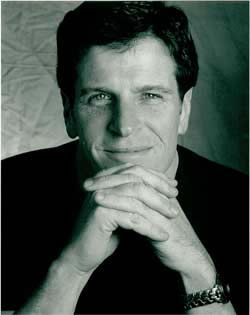
Randy is a professor at Cornish College of the Arts, where he originally was asked by Gary Peacock to fill in for a few classes that Peacock was teaching at the time. That is a pretty heavy endorsement right there. Now, Randy is a full professor and teaches piano and improvisation at Cornish.
Randy has also written a great book called "Metaphors For The Musician" which is one of the most interesting and helpful music books in my Basso Bass Book collection. And I own a LOT of books about music, it is seriously up into the hundreds of books at this point and Randy's book it one of the best. His book is not a book about scales, but it will change how you play them. It is not a book about learning tunes, but it will show you how to learn any tune you want deeper and faster than ever before. It is not a "you can play this scale over this chord" kind of book (although, there is some of that in there) but instead it takes you from scales to music in very interesting and engaging ways. Big Basso stamp of approval on this one.

Lest you think Randy is just some ivory tower academic, let me dissuade you of that incorrect idea. He also is a recording artist on Origin Records and has cut sides (as the cats say) on his own and as a side man for people like Mimi Fox and Greta Matassa. Some of his tunes are also in the Sher Real Books.
So Randy has seen probably his share of young students with chops through his teaching and has also got to play with legends like Gary Peacock, so it should be very interesting to get his take on what makes a "good" bass player.
Here is what Randy said (emphasis mine) :
For me, this question immediately splits into two questions:
- "What do I want from a bass player?" and
- "What do I want from any musician?"
Just to be ornery, let me go to the second question first. I need my musicians to have their ears wide open. They need to be in such control of their own musical "tasks" that they can listen to the others in the band with as much avid interest as an audience member. If they're too focused on taking care of their own business, they won't be able to contribute to a unified band sound, which is really more important. If a musician has his ears open and really hears everything that's going on around him, I know I can relax and just play. At that point, I don't care what he plays in response to what I play: he can imitate me, complement me, or contrast with what I'm doing. I know it'll be an honest and well-informed decision, and that's all I want.
I want my musicians to have distinct personalities. If one musician plays "behind the beat" and the next plays "on top of the beat," that's OK: I just need to know where they're coming from. I can enjoy playing with almost all types of musicians, but it's difficult to make something happen with a musician who's doing what he thinks he should, as opposed to what he wants to.
Of course, I want my musicians to be well-versed, both in terms of repertoire and vocabulary. Really, I just want to sense that they love and respect this music as much as I do. If they do, the repertoire and vocabulary will be there.
Hmm, frankly, that doesn't leave a lot for my answer to question #2.
I guess I would say that I want a bass player who enjoys both the "traditional" role of the bass as well as the opportunity to make a more personal statement. If a bassist is never willing to lay down a walk or a two-beat feel, and/or if he spends all of his time in the upper register of the instrument, it leaves me wondering why he didn't just become a guitarist. Again, it has to do with the overall band sound. Doesn't he realize what an opportunity he's missing to knit the band sound into a coherent whole? Why try to simulate what the drums and piano are already doing? This is a touchy area. I really don't want to make a bass player my "beast of burden," just laying down the groove all night so I can display all my cool reharmonizations and rhythmic displacements without fear of getting lost. I don't want to tell a bass player what or how to play: I want him to feel free to play what he hears. But if what he hears just doesn't contribute to the overall sound I'm going for, I'll just look around for someone else. And that doesn't mean that he's wrong. Being able to enjoy another musician's music and being able to play with that musician are not the same. Vive la difference!
Good stuff from someone who plays for a living.
Check out Randy's book and albums.
http://www.randyhalberstadt.com/
http://www.randyhalberstadt.com/Book.htm
Randy's Book at Sher Music
Randy At Origin Records
